The mental, physical, and logistical toll of relocating a lifetime of belongings cannot be overstated. For many, packing up an entire household and transitioning to a new property ranks among the most stressful life events a person can experience. You are not merely shifting boxes from one physical location to another; you are uprooting your daily routines, managing complex logistical timelines, and safeguarding the physical assets you have spent years or decades accumulating. The sheer volume of decisions required—from figuring out how to transport heavy furniture safely to deciding what to keep and what to discard—can quickly induce decision fatigue and lead to costly mistakes.
The cost of poor planning during a relocation is incredibly steep. Selecting the wrong transportation size can result in multiple exhausting trips or the sudden realization that you must leave valuable items behind. Opting for improper or unvetted labor can lead to catastrophic damage to your most precious family heirlooms, structural damage to your old or new property, and immense financial liability. Furthermore, failing to properly store sensitive items during the transition period can result in permanent ruin from moisture, pests, or extreme temperature fluctuations.
This comprehensive guide is your definitive roadmap to executing a seamless, meticulously organized relocation. We will navigate the complexities of vetting professional partners, deciding between full-service logistics and independent transport, and utilizing modern portable solutions. Additionally, we will cover the critical steps of safeguarding your investments during transit and executing a massive property purge to lighten your load. By implementing these strategic, actionable steps, you can eliminate the chaos traditionally associated with relocating and step into your next chapter with confidence and peace of mind.
Vetting and Selecting Professional Relocation Partners

When you decide to hand over the physical contents of your life to a third party, you are placing an immense amount of trust in their operational standards. The industry is vast, and unfortunately, it is entirely possible to fall victim to rogue operators who hold belongings hostage or disappear when items are damaged. Securing a reliable team requires you to look far beyond glossy websites and aggressive marketing campaigns. You must approach the vetting process with the rigor of an auditor, demanding transparency, verifiable credentials, and a proven track record of excellent customer care.
Verify Licenses, Department of Transportation Numbers, and Insurance Policies
The first and most non-negotiable step in your vetting process is verifying the legal operating status of any business you are considering. If you are crossing state lines, the federal government heavily regulates the industry.
-
Check the FMCSA Database: The Federal Motor Carrier Safety Administration (FMCSA) requires all interstate operators to have a valid U.S. Department of Transportation (USDOT) number. You must request this number and look it up on the official FMCSA website. This database will reveal the operator’s safety record, their complaint history, and whether they are an actual carrier (meaning they own the trucks and employ the crew) or a broker (meaning they simply sell your contract to the lowest bidder).
-
Understand Valuation and Liability Coverage: Never assume that your belongings are fully insured simply because a business claims to be fully licensed and insured. By default, federal law only requires operators to provide “Released Value Protection,” which typically covers a meager 60 cents per pound per article. If a fifty-pound flat-screen television is shattered, you will receive thirty dollars. You must ask explicitly about purchasing “Full Value Protection,” which holds the operator liable for the replacement value of lost or damaged goods.
-
Identify Critical Red Flags: Be on high alert for estimates provided over the phone without a detailed virtual or in-person walkthrough of your property. If an operator demands a massive cash deposit upfront, lacks a physical street address, or arrives for the estimate in an unmarked rental vehicle, terminate the conversation immediately. A legitimate moving company will provide a binding written estimate, accept credit cards for traceability, and maintain branded fleets.
Read Hyper-Local Customer Reviews and Dispute Histories
While a national brand might carry prestige, the actual execution of your job comes down to the specific crew dispatched from the regional dispatch center. Therefore, national ratings are far less important than the reputation of the specific branch operating in your city.
-
Filter for the Worst-Case Scenarios: Do not just read the five-star summaries. Filter reviews on third-party consumer advocacy sites to see the one-star and two-star complaints. Pay close attention to how the management responds to these disputes. Do they offer professional remediation, or do they blame the customer and ignore the issue?
-
Value Regional Expertise: There is immense value in hiring highly experienced local movers who intimately understand the unique logistical challenges of your specific area. They know which historic neighborhoods require special parking permits, they understand how to navigate notoriously tight urban alleyways, and they are familiar with the strict elevator reservation protocols of high-rise condominium buildings. This hyper-local knowledge prevents costly delays and municipal parking fines on the day of your transition.
Deciding Between Full-Service Logistics and Independent Transport
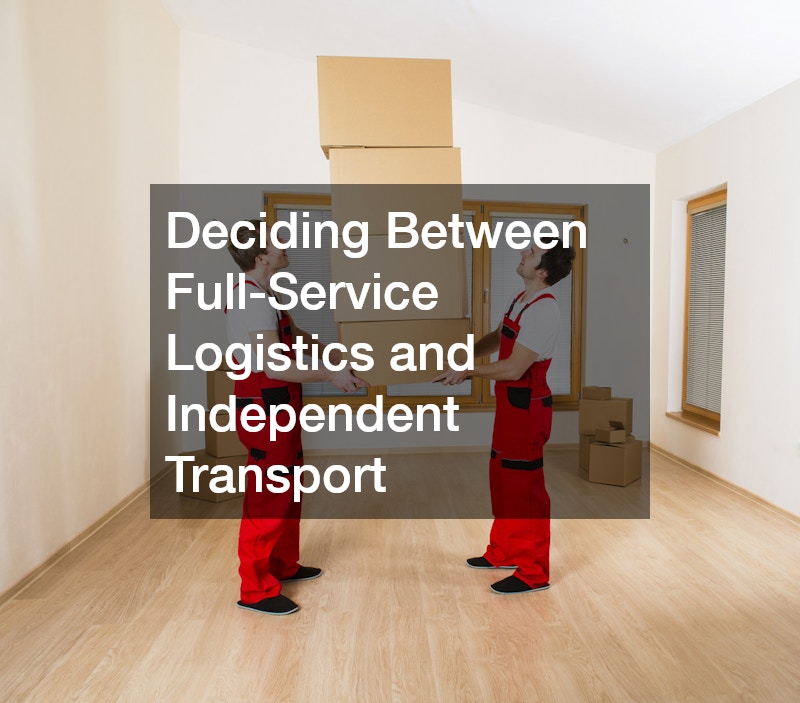
One of the most consequential decisions you will make early in the planning phase is whether to outsource the heavy lifting entirely or to take on the physical and logistical burden yourself. Both routes have distinct advantages and severe drawbacks. Making the right choice requires a brutally honest assessment of your physical capabilities, your available time, and your true budget.
Analyze the True Volume of Your Belongings
Before you can decide how to transport your life, you must understand exactly how much space your life occupies. Most people drastically underestimate the cubic footage of their belongings, leading to chaotic last-minute scrambles when a truck is filled to the brim with half the house left sitting on the lawn.
-
Calculate Cubic Footage and Weight: As a general baseline, a modestly furnished one-bedroom apartment requires roughly 400 to 600 cubic feet of cargo space. A heavily furnished three-bedroom house can easily exceed 1,500 cubic feet. You must measure your largest, most awkwardly shaped items—such as sectional sofas, king-sized mattresses, and massive dining tables—to ensure they will fit through the cargo doors of whatever vehicle you choose.
-
Evaluate the Physical Demands: Consider the physical realities of your current and future properties. Does your current home have three flights of narrow, winding stairs? Does your new property have a steep, unpaved driveway? If you possess items of exceptional weight or fragility, such as a grand piano, a slate-top pool table, or a large gun safe, relying on professional moving services that utilize specialized equipment like hoisting straps, appliance dollies, and hydraulic lift gates is usually the safest and most efficient path forward. Doing it yourself in these scenarios risks severe personal injury and property damage.
Factor in the Hidden Costs of Self-Driving Options
Choosing to manage the transport independently is often touted as the ultimate budget-friendly hack. While the advertised daily rental rate for a commercial vehicle might look incredibly appealing, the final receipt is almost always significantly higher once the hidden fees are tallied.
-
Calculate the Complete Financial Picture: The base rental fee is just the beginning. You must factor in per-mile charges, which add up rapidly on long-distance routes. Furthermore, commercial vehicles are incredibly heavy and not aerodynamic; you will spend a small fortune on fuel. Add in the cost of mandatory environmental fees, tolls (which are higher for multi-axle vehicles), heavy-duty padlocks, moving blankets, hand trucks, and the cost of feeding the friends you recruited to help.
-
Understand the Realities of Operating Heavy Machinery: Operating large box trucks is not like driving a standard passenger SUV. These vehicles lack a rearview mirror, require a massive turning radius, and have a significantly extended braking distance when fully loaded with thousands of pounds of furniture. You must map out your route carefully, actively avoiding low-clearance bridges, residential roads with weight limits, and drive-through lanes. If you are not entirely confident in your ability to navigate these massive vehicles through unpredictable traffic or severe weather conditions, the cost savings are simply not worth the immense stress and liability.
Utilizing Flexible, On-Site Portable Solutions
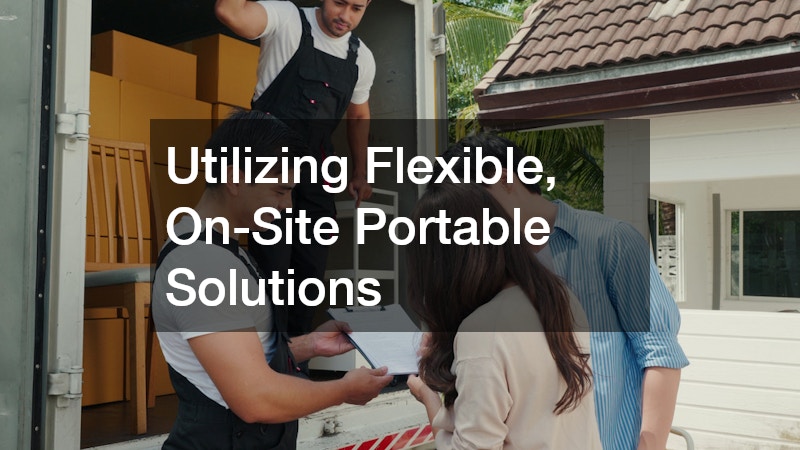
If the rigid timeline of a traditional one-day relocation fills you with anxiety, the modern logistics industry offers a brilliant alternative. Portable, modular solutions have revolutionized the way people transition between properties by decoupling the packing process from the actual day of transport. This methodology allows you to regain control over your schedule and execute the transition in manageable, low-stress phases.
Assess Driveway Space and Neighborhood HOA Restrictions
Before you commit to a modular delivery, you must confirm that your current property can physically and legally accommodate the equipment.
-
Measure Clearances and Grade: The delivery mechanism for these units is a specialized flatbed truck equipped with an automated level-lifting system. This system requires a significant amount of vertical clearance—often up to fifteen feet—meaning low-hanging tree branches, residential power lines, or structural overhangs can prevent delivery altogether. Additionally, the unit must be placed on a relatively flat, paved surface. A steep driveway or soft, muddy ground will pose severe safety risks.
-
Navigate Municipal and HOA Regulations: If you live in a community governed by a Homeowners Association, you must consult your bylaws before scheduling a drop-off. Many HOAs explicitly prohibit large industrial containers from sitting in driveways for more than forty-eight hours. Similarly, if you live in a dense urban environment and plan to place the unit on the street, you will likely need to secure a temporary municipal parking permit to avoid hefty fines or having the unit towed by the city.
Assuming you clear these logistical hurdles, utilizing weatherproof storage pods placed just steps from your front door offers an unparalleled level of convenience. You eliminate the need to repeatedly drive to an off-site facility or rush to load a rented truck before a strict 24-hour deadline expires.
Plan Your Packing Timeline for Phased Loading
The greatest advantage of having a container on your property is the ability to stretch the physical labor over several weeks. This requires a strategic, phased packing plan to maximize efficiency and protect your belongings during transit.
-
Load Strategically: Begin by packing out-of-season clothing, holiday decorations, and rarely used garage equipment. Load these items into the back of the unit, creating a solid, stable wall of identical-sized boxes. Keep your essential daily items—like kitchenware, immediate clothing, and toiletries—for the very final days, loading them near the doors for easy access upon arrival.
-
Scale Up for Massive Projects: If you are vacating a sprawling multi-family estate, managing an intense corporate relocation, or emptying a massive home for a total structural renovation, a standard residential unit will not suffice. In these scenarios, you can request a massive mobile storage trailer to be dropped at your location. These commercial-grade units offer exponentially more square footage and weight capacity, allowing you to secure entire households of furniture behind heavy-duty padlocks for extended periods while renovations are completed or real estate transactions are finalized.
Safeguarding Sensitive Belongings and Large Recreational Vehicles

A major relocation often reveals a gap between when you must vacate your current property and when your new property is ready to receive your belongings. In other instances, you may simply be downsizing and lack the square footage to house everything you own. When temporary housing of your assets is required, you must prioritize environmental protection and rigorous security above all else. A bargain-priced unit with a roll-up door is not the place for your most treasured possessions.
Protect Electronics, Artwork, and Documents from Extreme Weather
The primary enemy of stored goods is not theft; it is the insidious, invisible destruction caused by extreme weather and atmospheric changes.
-
The Science of Moisture and Heat Damage: When belongings are locked in a standard, uninsulated steel unit, the interior temperature can easily soar past one hundred degrees in the summer and plunge below freezing in the winter. As temperatures fluctuate, condensation forms on the interior walls and drips onto your boxes. This trapped humidity causes solid wood furniture to warp and crack, encourages aggressive mold growth on mattresses and upholstery, and causes the delicate adhesives in vintage books and record sleeves to disintegrate.
-
Invest in Premium Environmental Controls: If you are securing items of high financial or sentimental value—such as oil paintings, leather sofas, high-end stereo equipment, delicate musical instruments, or crucial business archives—you must utilize a premium climate controlled storage facility. These specialized buildings utilize heavy-duty commercial HVAC systems and industrial dehumidifiers to maintain a consistent temperature between 55 and 80 degrees Fahrenheit, while keeping relative humidity strictly below 55 percent. This stable environment is the only way to guarantee your sensitive items emerge in the exact condition they went in.
Store Seasonal Recreational Assets in Dedicated, Secure Off-Site Properties
Transitioning to a new property often means dealing with massive recreational assets that simply will not fit in a standard moving truck or a residential garage.
-
Alleviate Driveway Congestion: Large recreational items take up an immense footprint. Moving to a community with strict aesthetic rules or transitioning to a property with limited exterior parking requires you to find an alternative home for these large investments. Keeping them in your new driveway is often not an option and leaves them vulnerable to neighborhood vandalism or extreme weather.
-
Vet Specialized Marinas and Depots: Rather than settling for a generic parking lot, seek out a dedicated boat storage facility or a specialized RV depot. When touring these locations, focus heavily on the security infrastructure. Look for properties with towering perimeter fencing, bright stadium lighting, restricted keypad-access gates, and 24/7 digital video surveillance. Furthermore, the best locations will offer specialized amenities like on-site winterization services, covered canopy parking to protect gel coats from ultraviolet degradation, and wide, drive-up accessibility that makes backing up large trailers a stress-free experience.
Streamlining the Pre-Move Purge and Waste Disposal

One of the most universal truths of moving is that you never truly realize how much useless clutter you have accumulated until you are forced to place every single item into a cardboard box. Attempting to transport decades of broken appliances, unworn clothing, and outdated paperwork is an exercise in futility that inflates your budget and wastes your energy. The most efficient way to optimize your relocation is to aggressively streamline your inventory before the packing tape ever comes out.
Execute a Rigorous Inventory Purge Before Packing a Single Box
The pre-move purge requires you to overcome the sunk cost fallacy. You must accept that the money spent on an item a decade ago is gone, and holding onto that item now only costs you more in transportation and storage fees.
-
Implement the Twelve-Month Rule: Go through your property room by room, opening every closet, cabinet, and drawer. If you have not worn a piece of clothing, used a specific kitchen gadget, or displayed a piece of decor in the last twelve consecutive months, it does not belong in your new home.
-
The Three-Pile Strategy: Establish three distinct staging areas in your home: Keep, Donate, and Discard. High-quality items that you simply no longer need should be immediately bagged for charitable donation or sold on local peer-to-peer marketplaces to generate extra cash to fund your relocation. Broken electronics, torn furniture, and expired household goods must be destined for the discard pile. By ruthlessly downsizing, you will require fewer boxes, less cargo space, and significantly less labor, drastically lowering the overall cost of your transition.
Secure Convenient On-Site Waste Solutions for Large-Scale Discards
Once you have completed a massive purge, you will quickly realize that the municipal curbside trash bin at the end of your driveway is hopelessly inadequate for the volume of waste you have generated.
-
Manage Heavy Debris and Bulk Waste: Standard trash collection will simply not pick up shattered patio furniture, rolled-up sections of old carpet, heaps of broken drywall from a pre-move repair, or dozens of crushed cardboard boxes. To manage this massive influx of trash, you need commercial-scale solutions. Coordinating local dumpster rentals to be dropped in your driveway allows you to dispose of massive, unwieldy items instantly, keeping your home clear of dangerous, trip-hazard debris while you attempt to pack.
-
Load Safely and Understand Prohibited Materials: When managing a heavy-duty roll off dumpster, you must adhere to strict safety and legal guidelines. Always load the heaviest items—like broken appliances or dense construction debris—first, distributing the weight evenly across the bottom of the container to prevent it from tipping when the truck eventually winches it onto the flatbed. Additionally, you must be hyper-aware of environmental regulations. It is strictly illegal to toss hazardous materials such as wet paint cans, motor oil, car batteries, freon-filled refrigerators, or industrial solvents into these bins. You must coordinate with your municipality’s hazardous waste management facility to dispose of those highly specific items legally.
The success of a massive residential or commercial relocation is rarely determined on the actual day of the move; it is won or lost in the weeks of meticulous planning that precede it. By systematically evaluating the actual volume of your belongings, deciding honestly between outsourced logistics and independent transport, and implementing a ruthless strategy for downsizing, you effectively neutralize the chaos that derails most transitions.
Ultimately, every decision you make should prioritize the protection of your physical assets and your own peace of mind. Whether that means spending slightly more to ensure your sensitive electronics are kept in a temperature-regulated environment, hiring thoroughly vetted professionals to navigate heavy trucks through city streets, or simply renting the proper equipment to haul away decades of accumulated waste, these investments pay massive dividends in the long run. Do not wait until the final hour to begin your preparations. Challenge yourself to download a comprehensive logistics checklist today, take accurate measurements of your largest furniture pieces, and begin requesting formal, written estimates at least eight to ten weeks before your target transition date. With proper foresight, your next move will not be a grueling ordeal, but a streamlined, successful launch into your new home.