A major home cleanout can be surprisingly emotional and time-consuming. Whether you’re downsizing, handling an estate, preparing for a move, clearing out a relative’s property, or simply trying to reclaim space, the amount of stuff that accumulates over the years can be difficult to process all at once.
The temptation is to move quickly and focus on getting everything out of the house. That can lead to valuable items being donated, discarded, or bundled together before anyone takes the time to determine what they’re actually worth. Jewelry, coins, collectibles, furniture, vehicles, tools, and even scrap metal may have value that isn’t obvious at first glance.
A better approach is to sort first and remove later. Separate items into categories such as keep, sell, donate, recycle, and discard. Then take a closer look at anything that might have financial, collectible, or sentimental value before making a final decision.
Condition, age, rarity, brand, material, provenance, and local demand can all affect resale value. The goal isn’t to research every item in the house. It’s to slow down long enough to identify the categories most likely to contain something worth selling.
Separate Coins and Collectibles Before Throwing Anything Away
Coins are among the easiest valuables to overlook during a cleanout because they’re often stored in small boxes, desk drawers, jars, envelopes, safes, or old filing cabinets.
A handful of loose change may be worth little more than face value, but inherited collections, older coins, commemorative sets, silver pieces, proof sets, and foreign currency can deserve a closer look.
Start by setting aside anything that appears old, unusual, or intentionally collected. Look for coins stored in albums, cardboard holders, plastic capsules, tubes, or original packaging. The fact that someone took the time to organize or protect an item doesn’t guarantee high value, but it’s a good reason not to toss it into a general pile.
One of the most important rules is to avoid cleaning coins before they’re evaluated.
Polishing, scrubbing, dipping, or using household cleaners can damage the surface and reduce collector value. What looks like dirt or tarnish may actually be part of the coin’s natural aging process.
Professional coin appraisals can help determine whether a piece is valuable because of its rarity, condition, precious-metal content, or collector demand.
Several factors can influence value:
- Date: Some years had lower mintages than others.
- Mint mark: The location where the coin was produced can affect rarity.
- Condition: Wear, scratches, cleaning, and damage may influence collector interest.
- Metal content: Some older coins contain significant amounts of silver or gold.
- Errors and varieties: Certain production errors can be collectible.
- Original packaging: Proof sets and commemorative issues may be more desirable when complete.
If you find a collection, resist the urge to separate everything immediately. Keeping coins in labeled holders can preserve information about where they came from or how the previous owner organized them.
Precious-metal coins deserve special attention. Some pieces may be worth more for their gold or silver content than their face value, while others may also carry a numismatic premium.
If you believe a collection contains valuable gold pieces, speaking with a gold coin buyer can help you compare collector value with bullion value.
Before selling, consider getting more than one opinion when the collection appears substantial. You don’t need to become an expert, but you should have a basic idea of what you own before accepting an offer.
A practical sorting process might look like this:
- Set aside anything dated significantly earlier than modern circulation coins.
- Keep proof sets and commemorative packaging intact.
- Separate obvious silver and gold pieces.
- Photograph unusual coins before transporting them.
- Keep inherited notes or paperwork with the collection.
- Avoid cleaning or polishing.
Don’t forget paper currency, medals, tokens, military items, and old banknotes. These may fall outside ordinary coin collecting but can still have collector interest.
The main goal is simple: don’t assume small items have small value. Coins take up very little space, but they can sometimes be among the most valuable items discovered during a cleanout.
Review Jewelry and Precious Metals Before Donating Them
Jewelry is another category that deserves careful attention before anything is donated or discarded.
Old jewelry boxes often contain a mixture of fine jewelry, costume pieces, broken chains, watches, loose stones, and items that haven’t been worn in decades. Some may have sentimental value. Others may have value based on their metal, brand, craftsmanship, or gemstones.
A local jeweler can help identify materials and determine whether a piece is fine jewelry, costume jewelry, or something that needs a closer evaluation.
Don’t assume broken jewelry is worthless. A damaged bracelet, snapped chain, bent ring, or single earring may still have precious-metal value.
Likewise, outdated styles can still be valuable if they contain gold, platinum, or desirable stones.
If you’re considering a cash for gold offer, pay attention to how the evaluation is done.
Ask about:
- Weight
- Purity
- Current metal pricing
- Fees
- Whether stones are valued separately
- Whether the buyer is purchasing the item as jewelry or only for melt value
That distinction matters. A signed designer piece or antique ring may be worth more as a complete piece of jewelry than as scrap metal.
Watches deserve separate attention too. Certain mechanical, luxury, or vintage watches may have resale value even if they need service.
Try to locate original boxes, receipts, certificates, service records, and spare links. These can increase buyer confidence and sometimes affect value.
Before selling inherited jewelry, think about sentimental value as well. Once a piece is sold, it may be difficult or impossible to replace.
Avoid placing everything into one mixed box and selling it as a lot unless you already know the individual pieces are low value.
Jewelry can be deceptive because size doesn’t always correlate with worth. A small ring may be far more valuable than a large decorative necklace.
Taking time to separate, identify, and evaluate jewelry before the rest of the cleanout moves forward can prevent one of the most common sources of regret.
Identify Antiques and Valuable Household Items Before the Sale
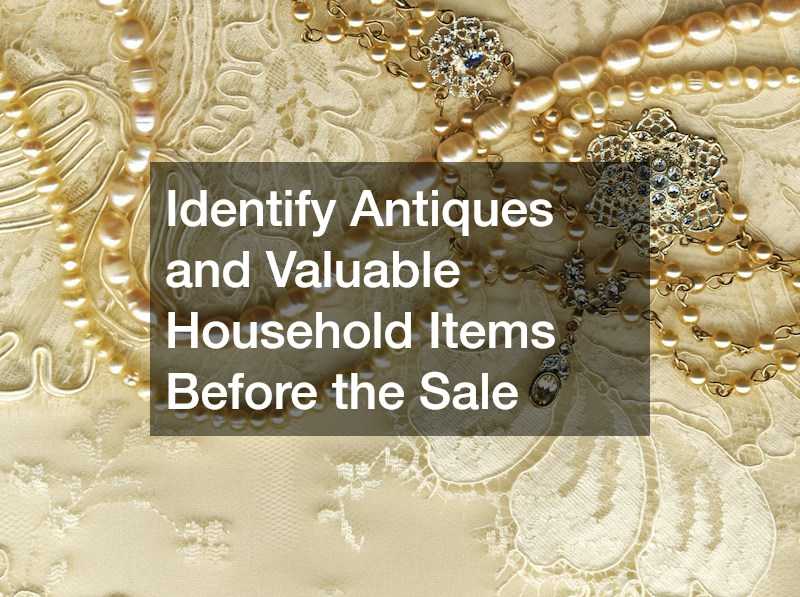
Not every old item is an antique, and not every antique is valuable. Still, older furniture, artwork, decorative objects, and household pieces should be reviewed before they’re added to a donation pile or dumpster.
Start by looking for clues that an item may be worth researching. Furniture is a good example. A heavy wooden dresser may simply be outdated, or it could be a desirable vintage or antique piece depending on the maker, style, age, and construction.
Before refinishing, painting, or repairing older furniture, consider whether those changes might reduce value. Original finishes and hardware may be important to collectors.
An antique dealer can help evaluate items that appear unusual, old, signed, or well made.
Categories worth checking include:
- Artwork
- Pottery
- Glassware
- Clocks
- Lamps
- Rugs
- Sterling silver
- Vintage advertising
- Musical instruments
- Furniture
- Decorative ceramics
- Military memorabilia
Condition matters, but damage doesn’t always eliminate value. Some collectors prefer original pieces that show age rather than heavily restored items.
Jewelry can overlap with this category as well. Someone planning to sell jewelry for cash should separate antique, signed, or gemstone pieces from ordinary scrap jewelry before accepting a bulk offer.
Don’t assume a large collection is valuable simply because it’s old. Many items were mass-produced and remain common.
Instead, look for rarity, maker information, completeness, original condition, and demand.
Online research can help with basic identification, but asking prices should be treated carefully. Someone listing an item for $500 doesn’t mean buyers are actually paying that amount.
A good rule is to create a temporary “research” area for anything that looks unusual. Don’t let those items disappear into the general cleanout pile until someone has looked at them.
You don’t need to spend hours researching every lamp and chair. Focus your time where there are signs of age, craftsmanship, rarity, or a recognizable maker.
A few careful evaluations can sometimes uncover much more value than a rushed estate or yard sale would produce.
Decide What to Do With Old Vehicles and Metal Items
Garages, barns, sheds, and driveways often contain some of the bulkiest and most difficult items in a home cleanout.
Old vehicles, tools, machinery, appliances, lawn equipment, and metal parts can take up significant space, but they may also have resale, parts, or scrap value.
Start with vehicles.
A car that hasn’t been driven in years isn’t automatically worthless. Used cars with mechanical problems may still have value depending on the make, model, mileage, condition, and local demand.
If the vehicle runs or could be made roadworthy with modest repairs, private sale or dealer sale may produce better results.
If the vehicle is severely damaged, missing major components, or has been sitting for many years, selling a junk car for cash may be more practical.
Compare offers rather than assuming the first quote is the only option. Some buyers value vehicles based mainly on weight, while others may consider parts demand.
Metal items around the property should be sorted too.
Potentially recyclable materials include:
- Copper piping
- Brass fixtures
- Aluminum
- Steel
- Cast iron
- Old appliances
- Automotive parts
- Metal shelving
- Tools
- Wire
Some metals are significantly more valuable than others, so separating them may help increase the amount you recover.
Be careful with items that contain refrigerants, fuel, oil, batteries, or other hazardous materials. These may require specific disposal procedures.
Before taking anything to a scrap yard, ask what materials are accepted and whether appliances or equipment need to be prepared first.
Tools should also be evaluated separately from scrap.
Older hand tools, machinist tools, woodworking equipment, and branded power tools may have resale value even if they look worn.
Likewise, lawn tractors, snowblowers, generators, compressors, and shop equipment may be worth selling as complete units or for parts.
Large items can be intimidating because moving them requires more effort than sorting a jewelry box or cabinet. But they can also represent a significant portion of the financial value recovered during a cleanout.
Create a Final Sell, Donate, Recycle, and Dispose Plan

Once the higher-value categories have been reviewed, the rest of the cleanout becomes much easier.
The final stage should focus on moving remaining items through a clear system rather than making decisions randomly from room to room.
Create separate zones for:
- Sell individually
- Sell at a yard or estate sale
- Donate
- Give to family
- Recycle
- Dispose
- Keep
Labeling these areas helps prevent confusion, especially when several people are involved.
Handle the most valuable items first. That reduces the risk of something important being accidentally loaded into a donation truck or dumpster.
Metal items that aren’t suitable for resale may still have recycling value. A scrap yard may accept materials that shouldn’t go into ordinary household trash.
Donations should also be planned rather than treated as a catch-all.
Many charities have restrictions on furniture, mattresses, electronics, building materials, and damaged goods. Call ahead before loading a vehicle.
If the volume of material is too large to handle alone, cleanout services can be helpful for estate situations, moves, foreclosures, downsizing, and heavily accumulated properties.
Before hiring anyone, ask:
- How pricing is calculated
- Whether labor is included
- Whether items are donated or recycled
- What materials aren’t accepted
- Whether hazardous items cost extra
- Whether large furniture must be disassembled
- How quickly the work can be completed
Also clarify whether you need removal only or additional help with sorting, packing, or moving.
Small valuables are often found in places people forget to check. Old envelopes may contain cash. Jewelry may be tucked into dresser drawers. Coins may be stored in coffee cans. Documents may be hidden inside books or file folders.
Cleaning out a home efficiently doesn’t mean rushing. The best process combines organization with enough patience to avoid throwing away something valuable.
Take Time to Find Value Before Clearing Everything Out
A successful home cleanout isn’t just about removing as much as possible. It’s about knowing what deserves a second look before it leaves the property.
Coins, jewelry, antiques, vehicles, tools, collectibles, and metal items may have value that isn’t obvious at first. Sorting these items before the main cleanout can help prevent valuable belongings from being donated or discarded.
Work in stages, create clear categories, and set aside anything that needs more research. Remember that value isn’t always financial, so give family members a chance to identify sentimental items before final removal.
A thoughtful, organized cleanout can reduce waste, recover unexpected cash, and protect meaningful belongings. Before anything leaves for good, take one final look to make sure nothing valuable has been overlooked.