
Most people treat home safety as a visible problem — a frayed wire, a cracked step, a leaky faucet. The hazards that actually cause long-term harm are usually the ones that go unnoticed for months or years. They don’t trigger alarms or show up during a quick walkthrough. They accumulate quietly inside walls, beneath floors, and in the air itself. Understanding what these hidden threats are, how they develop, and what separates a manageable risk from a serious one gives homeowners a genuine advantage — not just awareness, but the ability to act before symptoms appear.
What’s Living in Your Air Without You Knowing
Indoor air quality is consistently worse than outdoor air in most homes, according to the Environmental Protection Agency — often two to five times worse. The causes aren’t dramatic. They’re ordinary: synthetic carpets, pressed-wood furniture, cleaning products, and gas appliances all release compounds that accumulate in poorly ventilated spaces.
Volatile organic compounds, or VOCs, are among the most pervasive. They off-gas from paint, adhesives, and flooring materials — sometimes for years after installation. Formaldehyde is a common one, found in laminate flooring and some insulation products. At low levels it causes eye and throat irritation. At sustained higher levels, it’s classified as a human carcinogen.
Carbon monoxide is a more immediate danger. Gas stoves, furnaces, and attached garages are common sources. Because it’s odorless and colorless, exposure often presents first as headaches or fatigue — symptoms easy to attribute to stress or a cold.
The practical response involves a few layered steps:
- Install at least one carbon monoxide detector on every floor of the home, replacing units every 5 to 7 years as sensor accuracy degrades over time.
- Run kitchen exhaust fans during and for 10 minutes after cooking on gas burners, even when nothing appears to be burning.
- Choose low-VOC or zero-VOC paint and adhesive products when renovating — these are labeled clearly and widely available without a price premium at most hardware retailers.
Ventilation matters more than most homeowners realize. Even opening windows for 15 minutes daily in cold months makes a measurable difference in compound concentration.
Moisture, Mold, and the Damage That Spreads Unseen
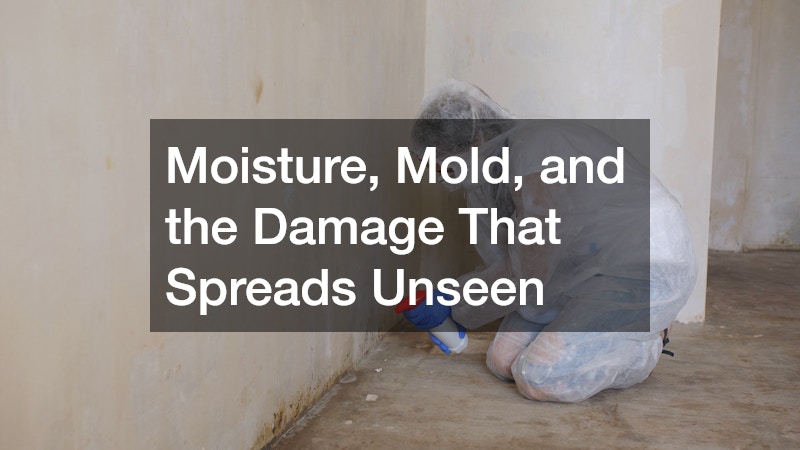
Water intrusion is the most underestimated structural and health problem in residential buildings. A slow leak inside a wall or beneath a subfloor can sustain mold growth for months before any visible sign appears. By the time a dark patch shows on drywall or a musty smell becomes undeniable, the colony is typically well established.
Mold produces mycotoxins and spores that aggravate asthma, trigger allergic reactions, and in cases of heavy exposure to certain species like Stachybotrys — sometimes called black mold — can cause more serious respiratory effects. Vulnerable populations, including children under five, elderly adults, and anyone with a compromised immune system, face higher risks at lower exposure levels.
The DIY versus professional question here is genuinely important. Patches of mold under 10 square feet are generally manageable with proper protective equipment — an N95 respirator, disposable gloves, and an antifungal cleaner. Anything larger, or mold located inside HVAC systems, requires professional remediation. Disturbing a large colony without containment spreads spores through the home and worsens the problem.
Catching moisture early is the real priority. Home inspectors increasingly rely on thermal imaging cameras, and infrared inspections can detect temperature differentials behind walls that indicate trapped moisture long before it becomes a mold problem. A moisture meter, available for around $20 to $50, is a useful tool for spot-checking areas around window frames, under sinks, and along basement walls after heavy rain.
Lead, Asbestos, and the Risk of Older Construction
Homes built before 1978 carry a well-documented risk of lead paint. The hazard isn’t the paint itself sitting intact on a wall — it’s the dust produced when that paint is sanded, chipped, or disturbed during renovation. Lead dust is colorless and settles on surfaces and floors where young children make contact with it constantly. Even low-level lead exposure in children is linked to developmental delays, reduced IQ, and behavioral issues. There is no safe threshold.
Asbestos presents a similar pattern. Used extensively in insulation, floor tiles, and textured ceiling coatings through the 1980s, it poses little risk when left undisturbed. The danger emerges during remodeling. Cutting into an asbestos-containing tile or scraping a popcorn ceiling releases fibers that, when inhaled, accumulate in lung tissue and can eventually cause mesothelioma or lung cancer — diseases with latency periods of 20 to 40 years.
The decision framework for older homes comes down to one question: is the material being disturbed?
- If intact and not in a high-traffic area where deterioration is occurring, document its location and leave it alone.
- If renovation work will touch it, hire a licensed asbestos or lead abatement contractor before any work begins — not during.
- For paint, use an EPA-certified lead test kit (available for around $10 to $30 at hardware stores) before sanding any surface in a pre-1978 home.
Attempting to remove asbestos-containing materials without proper containment and disposal protocols violates federal regulations and creates liability, not just health risk.
Radon, Pests, and the Risks Below the Surface
Radon is the second leading cause of lung cancer in the United States after smoking, responsible for approximately 21,000 deaths annually according to the EPA — yet surveys consistently show that most homeowners have never tested for it. It’s a naturally occurring radioactive gas that rises from soil and rock, enters homes through foundation cracks and gaps, and accumulates in basements and lower floors. It has no smell, no taste, and no visible presence.
Testing is inexpensive and straightforward. Short-term radon test kits cost $15 to $30 and are widely available. If a result comes back at or above 4 picocuries per liter (pCi/L), EPA guidance recommends mitigation — typically a sub-slab depressurization system installed by a certified contractor, with costs generally ranging from $800 to $2,500 depending on foundation type.
Pest activity also carries underappreciated health implications. Mice leave dried urine and feces that, when disturbed, release particles carrying hantavirus. Cockroach allergens — found in their shed skin and droppings — are a significant trigger for childhood asthma in particular. The distinction between reactive and preventive pest management is meaningful:
- Seal gaps larger than a quarter-inch around utility penetrations and foundation edges with steel wool and expanding foam before fall, when rodents seek warmth indoors.
- Address moisture and food source issues first — pest populations are sustained by conditions, not just opportunity.
Ignoring early signs of infestation rarely makes financial or health sense. A single mouse sighting in late autumn usually signals a larger entry problem worth investigating immediately.
Knowing When to Call a Professional
The line between self-monitoring and professional assessment shifts based on the age of the home, the presence of vulnerable occupants, and how long a potential problem has gone unaddressed. Newer, well-ventilated homes with no renovation history need less intervention. Older homes approaching renovation, or those with recurring moisture issues, warrant a more systematic approach.
A licensed home inspector or industrial hygienist can test for multiple hazards in a single visit. For homeowners who’ve already noticed symptoms — recurring headaches, unexplained respiratory issues, or musty odors that don’t resolve — professional air quality testing provides data that general awareness cannot. Acting on that data, rather than waiting for conditions to worsen, is where real risk reduction happens.